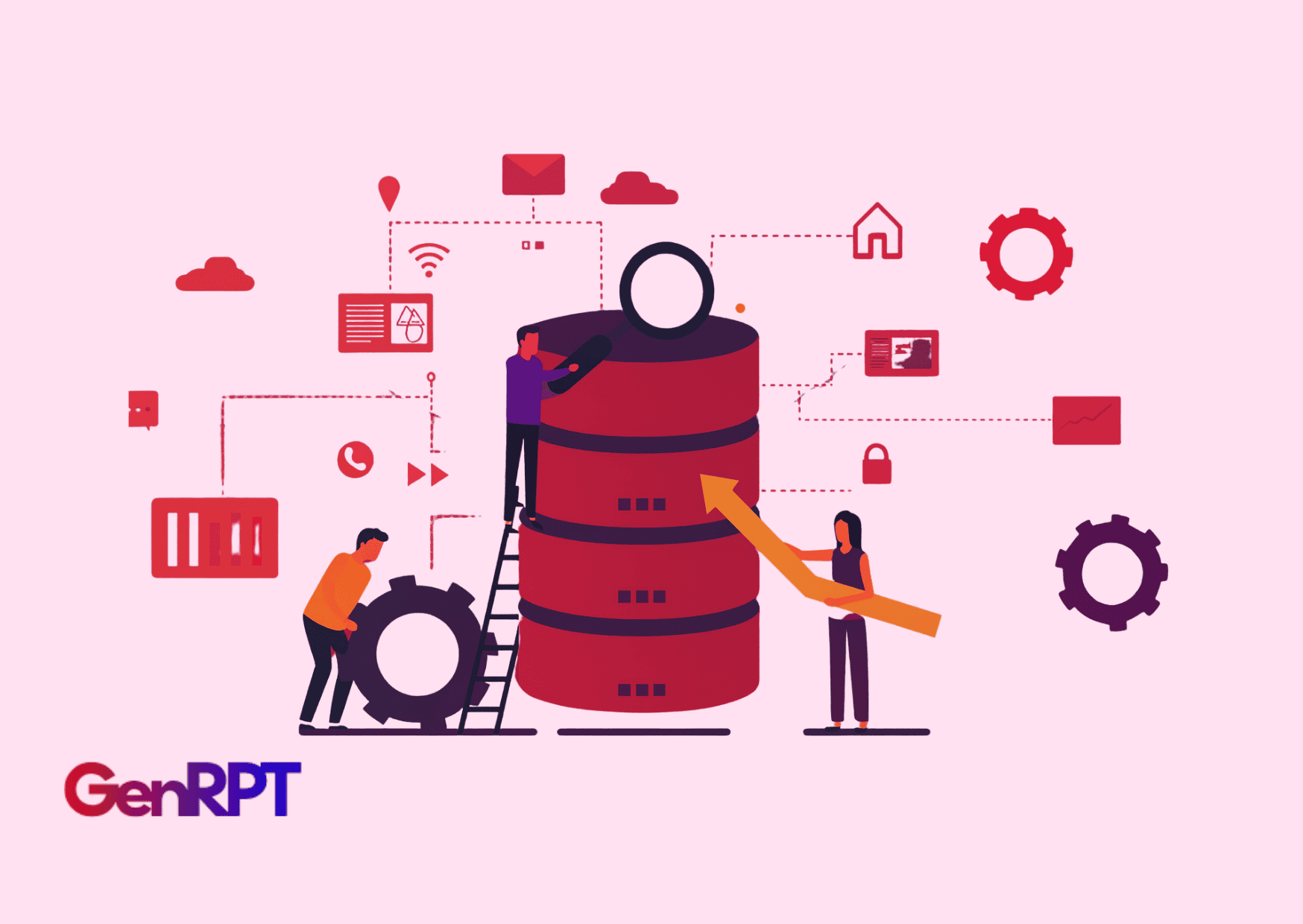
Unified Reporting: Bridging SQL, NoSQL, Excel, and PDFs in One View
December 1, 2025 | By GenRPT
Enterprises today work with more data than ever before. But the real challenge is not the volume of data. It is the fact that the data lives everywhere. Some information sits in SQL databases. Some sit in NoSQL systems. Spreadsheets store financial numbers. PDFs contain reports, contracts, and statements. Teams switch between tools all day, trying to combine everything into a single picture they can actually use.
This is where unified reporting becomes a game changer. Unified reporting creates one clean view of all your data, no matter where it comes from or what format it is in. Instead of jumping between screens or copying numbers from different files, teams finally get a single source of truth that is easy to read and easy to act on.
Let’s break down how unified reporting works, why it is important, and how AI-driven platforms like GenRPT make it even more powerful.
Why Data Feels Scattered in Most Organizations
Most teams use a mix of:
1. SQL databases for structured information
2. NoSQL systems for flexible or large-scale data
3. Excel sheets for calculations and daily work
4. PDFs for audit reports, contracts, financial statements, and presentations
Each format serves a purpose, but together they create a messy, disconnected workflow.
Teams face problems like:
1. Having to extract numbers manually
2. Searching multiple folders and dashboards
3. Confusion over the “latest” version of data
4. Difficulty comparing insights across sources
This slows decisions and increases errors. Unified reporting solves these problems by bringing everything into one consistent, easy-to-use interface.
What Unified Reporting Really Means
Unified reporting does not replace your systems. It connects to them.
It creates a shared, interactive view of data by:
1. Pulling structured data from SQL
2. Reading unstructured or semi-structured data from NoSQL
3. Extracting numbers and tables from Excel
4. Understanding text, tables, and charts from PDFs
All this information is collected, cleaned, aligned, and displayed in a single dashboard or report.
Users do not need technical skills like SQL queries or Python scripts. They simply access a unified view that already has the answers they need.
How AI Makes Unified Reporting Smarter
AI adds intelligence to unified reporting by doing what humans normally spend hours on.
1. Reading PDFs Automatically
AI systems extract tables, charts, footnotes, and insights from documents.
This replaces hours of copying and pasting.
2. Understanding Excel Sheets
AI can read formulas, link data, and detect errors.
3. Combining SQL and NoSQL Data
Instead of siloed dashboards, AI merges everything into one consistent dataset.
4. Cleaning and Standardizing Data
AI removes duplicates, fixes mismatched formats, and aligns time periods.
5. Creating Clear Narratives
Using NLP, AI writes summaries, risk notes, and insights that feel like a human analyst wrote them.
This makes reporting faster, more accurate, and far more useful for managers and decision-makers.
Why Unified Reporting Matters for Business
Organizations use unified reporting for better decisions, better planning, and better transparency. Here’s how it helps:
Better Accuracy
When all data connects to one place, mistakes drop dramatically.
Smarter Decisions
Leaders see the complete picture instead of relying on guesses or fragmented information.
Faster Insights
Reports that once took days are now available instantly.
Stronger Audit Readiness
No more hunting for missing files. Everything is neatly documented and connected.
More Time for Real Work
Analysts spend less time collecting data and more time analyzing it.
A Real-World Scenario: Before and After Unified Reporting
Before Unified Reporting
A financial analyst wants to prepare a monthly performance report:
1. SQL gives revenue data
2. NoSQL gives customer behavior
3. Excel has risk metrics
4. PDFs hold last month’s meeting notes and audit updates
The analyst spends hours:
1. Downloading files
2. Cleaning data
3. Matching time periods
4. Fixing spreadsheet errors
5. Searching for updated documents
6. Creating charts manually
By the time the report is ready, the data is already outdated.
After Unified Reporting
The same analyst logs into a single dashboard:
1. Revenue flows in live from SQL
2. Customer patterns refresh from NoSQL
3. Excel metrics sync automatically
4. PDFs are read by AI and summarized
The entire report is up-to-date, accurate, and ready to share.
Instead of spending 10 hours building the report, the analyst spends 30 minutes understanding what it means and making recommendations.
This shift changes how teams work and how organizations grow.
GenRPT: Making Unified Reporting Simple
GenRPT is built to connect all these systems with ease. It brings SQL, NoSQL, Excel, and PDFs into one unified reporting flow using:
1. Artificial Intelligence (AI)
2. Machine learning
3. NLP
4. Data mining
5. Agentic AI
6. LLM-powered analysis
7. Automated workflows
GenRPT reads raw data, extracts insights, writes summaries, and creates board-ready reports automatically.
With its ability to blend structured and unstructured data, GenRPT becomes a reliable intelligence layer for:
1. CFOs
2. Financial analysts
3. Portfolio managers
4. Research teams
5. Audit teams
6. Strategy teams
Organizations no longer need multiple dashboards or manual data stitching. GenRPT delivers one clean, trusted view of everything that matters.
Conclusion
Unified reporting is more than a convenience. It is the foundation of modern decision-making.
Bridging SQL, NoSQL, Excel, and PDFs into one view removes confusion, saves time, and improves accuracy across the organization. When combined with AI-driven platforms like GenRPT, unified reporting becomes faster, smarter, and far more reliable.
Enterprises that build unified reporting today will make stronger decisions tomorrow. The future belongs to teams that can see everything clearly, instantly, and in one place.