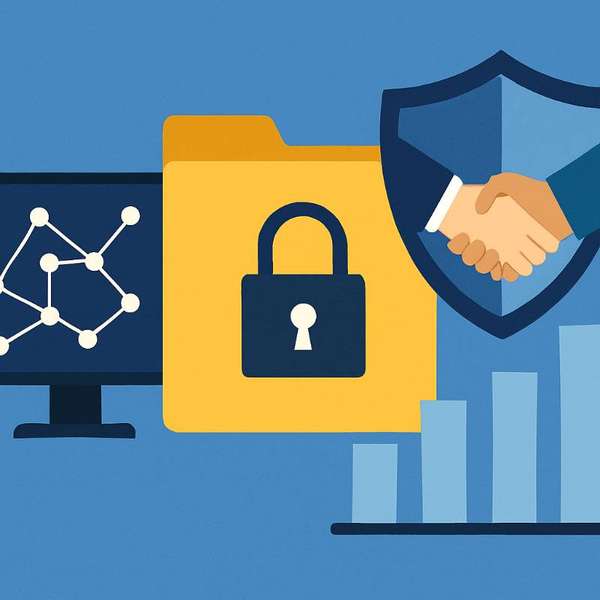
The Role of Data Governance in Maintaining Trust
March 2, 2026 | By GenRPT
In today’s data driven world, organizations depend on data analysis to guide decisions, improve efficiency, and remain competitive. As data volumes grow and diverse data sources multiply, maintaining trust in information becomes more complex. A strong data governance framework is essential to ensure data integrity, governance and security, and regulatory compliance. When governance is embedded into a modern data analysis solution, organizations can enable fast data analysis while protecting sensitive information and sustaining long term trust.
Understanding Data Governance and Trust
Data governance refers to the policies, standards, and processes that control how data is managed across an organization. It defines ownership, establishes quality benchmarks, and enforces governance and security protocols. Trust in data depends on its accuracy, consistency, and protection.
When governance structures are clearly defined, organizations can confidently perform fast data analysis because the underlying information is reliable and compliant. Stakeholders can rely on insights without worrying about inaccuracies or breaches. Strong governance reduces uncertainty and enables responsible innovation.
Security is a central pillar of governance. Protecting personal, financial, and operational data strengthens confidence among customers, regulators, and internal teams. Trust grows when data is both usable and secure.
Strategic Components of Data Governance
Clear Data Ownership
Assigning accountability ensures that data quality and security standards are maintained consistently. Data owners are responsible for monitoring integrity, usage, and compliance.
Defined Quality Standards
Organizations must establish metrics for completeness, accuracy, and consistency. Quality controls ensure that insights generated through a data analysis solution are dependable.
Embedded Governance and Security
Encryption, access control mechanisms, and audit logs protect data from misuse. Security measures should be integrated into data pipelines rather than applied as an afterthought. This approach supports both compliance and operational efficiency.
Regulatory Compliance
Adhering to regulations such as GDPR or HIPAA is critical. Governance frameworks translate legal requirements into operational procedures. Compliance protects organizations from penalties and reinforces stakeholder trust.
Data Awareness Culture
Training employees on governance and security responsibilities reduces risk. When teams understand policy expectations, responsible data usage becomes part of organizational culture.
Combined with automation tools for profiling and monitoring, governance processes become scalable across diverse data sources.
Enabling Trust Through Integrated Data Management
Modern enterprises rely on diverse data sources including CRM platforms, social media, IoT systems, cloud applications, and transactional databases. Integrating these sources without governance introduces risk.
A comprehensive data analysis solution should unify these data streams while applying consistent governance and security controls. This ensures accurate reporting and fast data analysis without compromising compliance.
Integrated governance improves visibility. Leaders gain confidence that analytics outputs reflect verified and secure data.
Real World Use Cases
Financial Services
Financial institutions rely on governance frameworks to manage transaction data and customer information. Strict access controls and monitoring systems ensure compliance while enabling real time fraud detection.
Healthcare
Healthcare providers manage electronic health records, medical device outputs, and insurance data. Strong governance protects patient privacy and supports accurate clinical decisions based on trustworthy analytics.
Retail
Retail organizations integrate sales systems, loyalty programs, and online behavior tracking. Governance ensures data consistency while security safeguards customer information during fast data analysis processes.
Across industries, effective governance strengthens analytics performance and protects reputation.
Future Outlook
As data ecosystems expand, governance strategies will become more automated and intelligent. Artificial intelligence and machine learning will support real time quality checks and anomaly detection. Automated enforcement mechanisms will help organizations manage rapidly growing diverse data sources.
Standardized governance frameworks will improve interoperability across industries. Integrated governance and analytics platforms will enable organizations to maintain fast data analysis while upholding strict compliance standards.
Continuous investment in governance technology will remain essential as regulatory requirements evolve.
Conclusion
Maintaining trust in an era of diverse data sources and rapid data analysis is a critical challenge for organizations. Effective data governance provides the foundation for reliable, secure, and compliant data management. By establishing clear policies, implementing security measures, and fostering a data-centric culture, organizations can confidently harness their data assets to drive strategic decisions. Cutting-edge solutions like GenRPT support these efforts by offering robust data analysis capabilities alongside governance and security features. This synergy ensures that organizations can perform fast, trustworthy data analysis while safeguarding sensitive information. As data ecosystems evolve, continuous investment in governance will be essential to preserving stakeholder trust and sustaining long-term success.