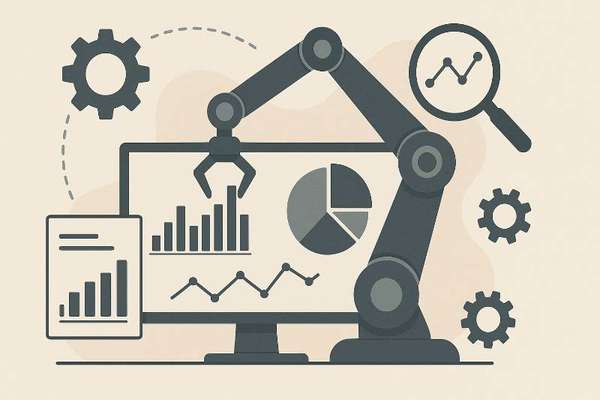
Implementing Automation in Reporting and Analytics
February 26, 2026 | By GenRPT
Introduction
In an era marked by rapid digital transformation, organizations across industries are increasingly relying on data to inform strategic decisions. With the volume and complexity of data expanding exponentially, manual reporting processes have become inefficient and prone to error. Effective utilization of data not only requires capturing and storing information but also analyzing it quickly and accurately. This necessity has driven the adoption of automation in reporting and analytics. Implementing automation allows businesses to streamline their reporting processes, harness advanced data analytics, and enhance overall business intelligence capabilities. Organizations aiming to stay competitive must understand how to integrate these technologies effectively, balancing innovation with operational stability.
About the Topic
Automation in reporting and analytics refers to the use of software tools and algorithms to perform data collection, processing, analysis, and report generation with minimal human intervention. Traditionally, these tasks were manual, labor-intensive, and time-consuming, often leading to delays and inconsistencies. Today, advanced data analytics combined with efficient report automation enable organizations to generate insights swiftly, ensuring decision-makers have timely access to critical information. The deployment of these capabilities forms part of a broader digital strategy centered around business intelligence tools that help translate raw data into actionable insights.
The core functions of automation encompass data integration from multiple sources, real-time data processing, and automated report generation. These processes improve accuracy, reduce redundancy, and free staff to focus on higher-value activities like strategic analysis. Furthermore, automation facilitates continuous monitoring of key performance indicators (KPIs), allowing for faster response to emerging market trends or operational issues. As a result, businesses gain a competitive advantage by making data-driven decisions based on the most current information available.
Importance / Scope / Key Features
The importance of implementing automation in reporting and analytics cannot be overstated. For large organizations, manual reporting workflows often become bottlenecks, delaying critical insights. Automated systems ensure that data is consistently refreshed and reports are generated on schedule. This capability enhances decision-making agility in fast-paced environments. Moreover, automation minimizes human errors, which are common in manual data handling and calculations.
A typical business intelligence tool designed for automating reports integrates various features essential for comprehensive analysis. These include dashboard creation, scheduled report distribution, data visualization, and alert systems that notify users of anomalies or significant changes. Customization is also vital, enabling organizations to tailor reports to specific needs or stakeholder preferences. Additionally, scalability plays a crucial role; as organizations grow and data sources multiply, the automation system must efficiently accommodate increased complexity without degradation in performance.
Use Cases
Many industries benefit significantly from automation in reporting and analytics. In retail, for instance, real-time sales data analysis helps optimize inventory levels and improve customer satisfaction. Financial service firms leverage advanced data analytics to detect fraud patterns and assess risk swiftly. Manufacturing companies utilize automated reporting to monitor production efficiency and maintenance schedules, minimizing downtime. The healthcare sector relies on automated data collection and reporting for patient outcomes analysis and regulatory compliance.
Small to medium-sized businesses also find value in implementation, especially when integrating with cloud-based business intelligence tools. These solutions enable streamlined reporting processes, reducing the need for extensive IT infrastructure and allowing rapid deployment across departments. Additionally, organizations aiming to improve transparency benefit from automated report automation by providing stakeholders with consistent and comprehensive insights. Overall, automation empowers teams to access critical information quickly, facilitating proactive management and strategic planning.
Future Outlook
The future of automation in reporting and analytics is poised to evolve with technological innovations. Artificial intelligence and machine learning algorithms will play an increasingly significant role in predictive analytics, enabling organizations to anticipate future trends rather than just report on past performance. These intelligent systems will identify patterns in large data sets that human analysts might overlook, supporting more proactive decision-making.
Furthermore, advances in data visualization will make complex information more accessible and understandable. Natural language processing will enhance report generation by producing narrative summaries of data insights in plain language. Beyond technical enhancements, organizations will focus on integrating automation seamlessly into their workflows, fostering a data-driven culture that encourages continuous improvement. Cloud computing and scalable infrastructure will ensure that these advanced tools remain accessible regardless of organizational size, allowing even small firms to harness the benefits of automated analytics at a lower cost.
As these developments unfold, organizations should also be mindful of potential challenges, such as data privacy concerns and the need for upskilling staff to operate sophisticated systems effectively. Strategic planning and investment in training will be essential to maximize the advantages of automation while mitigating risks.
Conclusion
Implementing automation in reporting and analytics is a strategic move that significantly enhances an organization’s ability to leverage its data effectively. It allows for efficient report automation, reducing manual effort and minimizing errors. As a result, organizations can focus on interpreting insights and making informed decisions, rather than spending valuable time on routine data processing tasks. The integration of a robust business intelligence tool enables streamlined reporting processes, ensuring timely access to vital information and supporting real-time decision-making.
Technology solutions like GenRPT facilitate this transition by providing scalable and customizable automation capabilities. Such tools help organizations build resilient, efficient reporting workflows that adapt to evolving data landscapes. By adopting automated analytics, companies can gain a competitive edge through quicker insights, better resource allocation, and improved operational agility. The continual evolution of AI and machine learning promises even smarter automation options in the future, making data-driven decision-making more accessible than ever.
Ultimately, organizations that embrace automation in reporting and analytics will be better positioned to navigate complex market environments, capitalize on emerging opportunities, and sustain long-term growth. Strategic use of these technological innovations ensures that data remains a valuable asset, rather than a source of overload or confusion. As businesses look to maximize the value of their data, adopting tools and practices that support efficient report automation and advanced data analytics will be a key differentiator moving forward.
Conclusion
Adopting automation in reporting and analytics empowers organizations to improve their decision-making processes profoundly. From streamlining reporting processes to utilizing advanced data analytics, automation addresses many of the inefficiencies traditionally associated with manual workflows. By integrating effective business intelligence tools, companies can ensure that their data is not only accurate but also accessible in real-time, fostering a proactive management style. Such innovations are fundamental to maintaining competitiveness in today’s fast-changing market landscape.
Furthermore, tools like GenRPT play a vital role in this transformation. They facilitate efficient report automation, help develop a streamlined reporting process, and support advanced analytical functions. Automation reduces operational burdens while boosting the accuracy and relevance of insights delivered to stakeholders. Moving forward, organizations that invest in AI-driven analytics and scalable automation systems will be better equipped to anticipate market shifts, respond swiftly, and unlock new growth opportunities, all while maintaining high standards of data governance and privacy.
Embracing these technological advancements is not merely an option; it is a strategic necessity. As data continues to grow in volume and complexity, leveraging automation ensures organizations remain agile, informed, and competitive. The integration of comprehensive business intelligence tools, aligned with future technological trends, will enable organizations to turn their data into a true strategic asset, driving innovation and sustaining success in an increasingly data-driven world.