Handling Data Variety from Multiple Sources
March 2, 2026 | By GenRPT
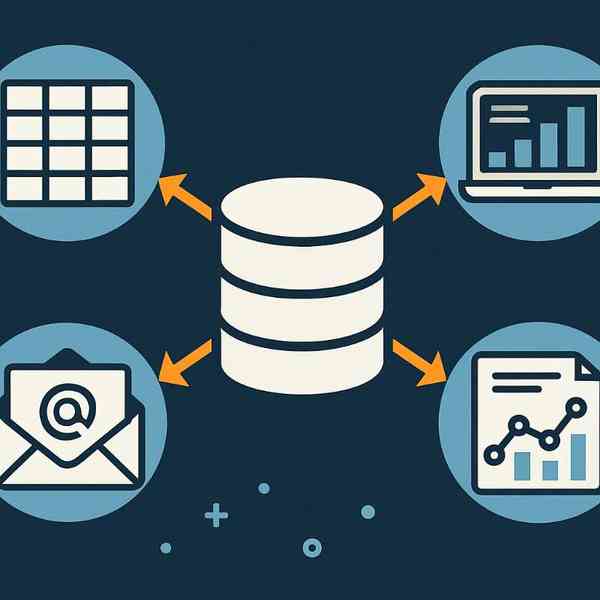
Today, every organization runs on data. But the real challenge is not collecting data. It is managing the variety of data that comes from different sources. Data now flows in from databases, cloud platforms, mobile apps, IoT devices, emails, logs, and social media. Each source has a different format and structure. Some data is clean and structured. Some is messy and unstructured. If these data streams remain disconnected, businesses miss valuable insights. To turn this complexity into opportunity, organizations need a strong data analysis solution that can handle multiple data sources, ensure governance and security, and support fast data analysis without slowing down operations.
Understanding Data Variety in Modern Enterprises
Data variety simply means different types of data. Structured data lives in relational databases and spreadsheets. It is easy to query and analyze. Unstructured and semi structured data include emails, chat logs, PDFs, social media posts, images, and sensor data. This type of data carries rich context but is harder to process. If businesses only analyze structured data, they get an incomplete picture. Sales numbers show what happened. Customer emails explain why it happened. Social media shows how customers feel about it. When these sources stay isolated, insights remain fragmented. A flexible data analysis solution helps merge these streams into one unified system.
Why Integration Is Critical
Without proper integration of diverse data sources, organizations face three major risks. They miss insights. They make poor decisions. They create security gaps. Disconnected systems create blind spots. Data silos slow down reporting and reduce accuracy. Poor governance increases compliance risk. The solution is not just storing more data. The solution is building an integrated data architecture that supports multiple formats and ensures governance and security at every stage.
Strategic Approach to Managing Multiple Data Sources
Handling data variety requires a clear and practical approach.
Choose a Flexible Data Analysis Solution
The foundation is selecting a platform that connects easily with structured databases, cloud applications, real time streams, external APIs, and semi structured or unstructured files. Scalability matters. As data volume grows, the system must grow with it.
Strengthen Governance and Security
Governance and security are mandatory. Organizations must implement role based access control, encryption at rest and in transit, audit trails, data quality checks, and compliance monitoring. Strong governance ensures that while integrating multiple data sources, sensitive information remains protected. This builds trust with customers and regulators.
Enable Fast Data Analysis
Speed changes everything. When businesses perform fast data analysis, they can detect fraud in real time, monitor operational risks, respond to customer sentiment quickly, and identify performance bottlenecks. High velocity data from IoT devices, social platforms, or financial systems requires real time processing. Speed should never compromise governance and security. The right architecture balances both.
From Data Acquisition to Action
Data Ingestion
Data enters the system through automated pipelines. Built in connectors and APIs simplify integration across multiple data sources. Automation reduces manual effort and lowers error rates.
Data Transformation and Cleansing
Raw data rarely arrives in perfect shape. It must be standardized, normalized, and validated. Aligning data into a common structure ensures accurate analysis.
Analysis and Visualization
Once consolidated, advanced analytics tools help uncover patterns and correlations. Modern data analysis solutions can process semi structured and unstructured data efficiently, providing insights that traditional reporting tools miss.
Industry Use Cases
Retail
Retailers combine sales data, clickstream logs, customer reviews, and social mentions. By analyzing diverse data sources together, they build detailed customer profiles and improve personalization strategies.
Financial Services
Banks collect trading data, transaction records, regulatory reports, and news feeds. Fast data analysis across these sources supports fraud detection, risk assessment, and compliance monitoring.
Manufacturing
Manufacturers integrate sensor data, maintenance logs, supply chain records, and quality metrics. This integration enables predictive maintenance and improves operational efficiency. Across industries, the ability to handle data variety directly impacts performance and decision speed.
Future Outlook
Data environments will only become more complex. Artificial intelligence and machine learning will improve how organizations process unstructured data. Edge computing will reduce latency for real time insights. Cloud platforms will provide scalable infrastructure to manage growing data volume. Governance and security frameworks will also evolve. As cyber threats become more sophisticated, multi layered protection and stronger compliance standards will become standard practice. Interoperability standards will improve, making it easier to integrate diverse data sources without heavy customization. Organizations that build flexible, secure, and scalable data architectures today will be better prepared for tomorrow’s complexity.
Conclusion
Handling data variety from multiple sources is a strategic necessity. A modern data analysis solution must integrate structured and unstructured data, support fast data analysis, maintain strong governance and security, and scale as data volume increases. When organizations unify their diverse data sources, they gain a complete and accurate view of operations, customers, and risks. This drives smarter decisions and stronger competitive advantage. GenRPT supports this need by offering a secure, scalable, and flexible data analysis platform designed to manage complex, multi source environments. By combining fast data analysis with built in governance and security controls, GenRPT helps organizations turn data variety into strategic value.