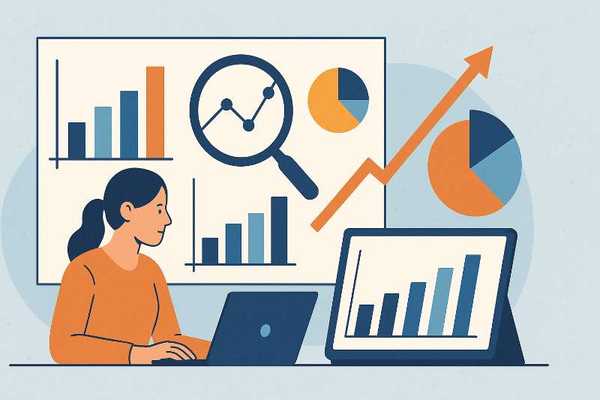
Data Analysis Strategies for Data-Driven Organizations
February 27, 2026 | By GenRPT
Introduction
In today’s fast-paced digital landscape, organizations are increasingly relying on data to make strategic decisions. Data analysis has become the cornerstone of a successful business, enabling companies to uncover valuable insights, optimize operations, and stay ahead of the competition. Effective data analysis strategies facilitate not only understanding vast amounts of information but also translating it into actionable steps. As organizations strive for efficiency, tools that support efficient report generation and AI-driven insights are vital. This comprehensive guide explores the best practices, use cases, and future outlook of data analysis strategies for data-driven organizations.
About the Topic
Data analysis involves examining, cleaning, transforming, and modeling data to discover useful information, draw conclusions, and support decision-making processes. It is a multidisciplinary field that combines statistics, computer science, and domain expertise. In a data-driven organization, the goal is to harness data to improve performance and competitiveness continuously. Achieving this requires implementing a well-designed data analysis strategy that covers data collection, processing, analysis, and reporting.
Companies today face challenges such as large data volumes, diverse data sources, and the need for rapid decision-making. To address these issues, many organizations turn to advanced tools that facilitate AI-driven insights and automated report generation. These innovations help streamline workflows, reduce manual effort, and enhance the accuracy and clarity of reports. Ultimately, organizations that adopt robust data analysis strategies are more agile, insightful, and capable of turning raw data into strategic advantage.
Title-Specific Strategic Section
Building an Effective Data Analysis Framework
To maximize the benefits of data analysis, organizations must develop a strategic framework tailored to their specific needs. The core components of an effective data analysis framework include data collection, data cleansing, exploration, modeling, and reporting.
1. Data Collection and Integration
The foundation of any data analysis strategy is comprehensive and accurate data collection. Organizations should establish reliable methods to gather data from various sources like customer interactions, operational systems, and social media. Integrating data across platforms ensures a holistic view, enabling more meaningful insights. Automation of data collection reduces errors and allows for real-time analysis.
2. Data Cleansing and Preparation
Raw data often contains inconsistencies, missing values, or inaccuracies. Data cleansing is essential to ensure analysis accuracy. Proper preparation involves filtering out irrelevant information, filling gaps, and standardizing data formats. This step enhances the reliability of subsequent analysis and reporting.
3. Exploratory Data Analysis (EDA)
This stage involves analyzing data to understand distributions, trends, and relationships. Visualization tools help uncover patterns that might not be evident through raw data. EDA guides the selection of appropriate models and highlights areas requiring deeper investigation.
4. Model Building and Analytics
Employing statistical models, machine learning algorithms, or AI systems helps predict trends and identify key drivers. These models can range from simple regression analyses to complex neural networks, depending on organizational needs. The focus should be on creating scalable models that deliver insights consistently.
5. Automated Report Generation
Communicating insights effectively is as important as analysis itself. Efficient report generation ensures decision-makers receive clear, timely, and actionable reports. Modern tools now support automated report creation, reducing manual effort and allowing for rapid dissemination of findings.
6. Deployment and Continuous Improvement
Implementing a cohesive pipeline from data collection to reporting allows organizations to monitor performance and adjust strategies. Regular reviews and updates ensure the data analysis process evolves with changing business environments.
Use Cases
The diverse applications of data analysis strategies demonstrate their value across sectors. Here are some typical use cases
– Marketing Optimization
Organizations leverage data analysis to understand customer behaviors, segment audiences, and tailor marketing campaigns accordingly. AI-driven insights can identify emerging trends and personalize customer outreach, resulting in higher conversion rates.
– Operational Efficiency
Data analysis helps improve operational processes by pinpointing bottlenecks and inefficiencies. Companies can monitor supply chain logistics, workforce productivity, or maintenance schedules. Automated report generation simplifies ongoing performance tracking, enabling prompt corrective actions.
– Financial Forecasting
Financial teams utilize data analytics to project revenues, manage risks, and detect discrepancies. AI-driven insights facilitate more accurate forecasts, guide investment decisions, and ensure regulatory compliance through detailed reporting.
– Product Development
Analyzing customer feedback, usage patterns, and market trends informs product design and innovation. Data-driven organizations can rapidly adapt to market demands, reducing time-to-market and enhancing competitiveness.
– Customer Support Enhancement
By analyzing support tickets and chat logs, organizations can identify recurring issues and improve service quality. Insights derived from data enable proactive support strategies and improve overall customer satisfaction.
Future Outlook
The future of data analysis for data-driven organizations is poised to become even more sophisticated thanks to technological advancements. The integration of artificial intelligence and machine learning will continue to enhance the depth and accuracy of insights. We can expect more automated workflows, enabling real-time data processing and instant report generation.
Furthermore, the emergence of advanced visualization tools will make complex data more accessible and understandable for decision-makers. Cloud-based analytics platforms will facilitate collaboration, allowing teams across multiple locations to work with unified data sets seamlessly.
The rise of natural language processing (NLP) will also revolutionize report generation, making it possible to generate comprehensive textual summaries of data insights automatically. As data privacy regulations evolve, organizations will need to adopt secure methods to manage sensitive data without compromising analytical integrity.
Overall, data analysis strategies will become more integrated, intelligent, and accessible, empowering organizations to maintain agility and competitiveness in an increasingly data-centric world.
Conclusion
Effective data analysis strategies are fundamental to the success of data-driven organizations. They involve a systematic approach to data collection, cleansing, exploration, modeling, and reporting. By implementing these strategies, organizations can generate AI-driven insights that support smarter decision-making. Efficient report generation ensures that insights reach the right stakeholders promptly, enabling swift action and continuous improvement.
Tools that facilitate automation and visualization, along with a clear strategic framework, help organizations unlock the full potential of their data. As technology advances, the capabilities of data analysis will expand further, providing deeper insights and fostering a culture of informed decision-making.
GenRPT plays a vital role in this ecosystem by supporting organizations in creating automated, accurate, and timely reports. Its capabilities ensure that businesses can efficiently communicate complex data insights, ultimately enhancing their ability to stay competitive in a data-driven landscape. Embracing robust data analysis strategies will empower organizations to turn data into their most valuable asset for sustained growth and innovation.