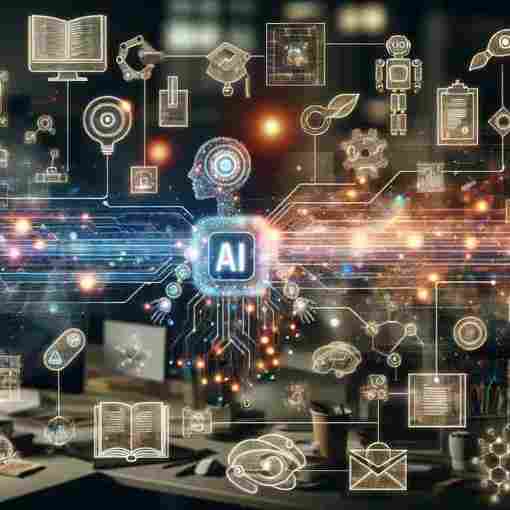
Emerging AI Tools Revolutionizing Workflows
January 29, 2026 | By GenRPT
The rapid advancement of artificial intelligence has transformed how industries approach tasks, data analysis, decision-making, and automation. Central to this transformation is the emergence of powerful tools powered by large language models (LLMs) and innovative AI workflows. Organizations seeking efficiency and accuracy now increasingly turn to tools like GenRPT, which exemplify the capabilities of modern AI solutions. As AI continues to evolve, understanding the most promising emerging AI tools is crucial for leveraging their potential effectively.
About the Topic
Emerging AI tools refer to innovative applications built upon recent advances in artificial intelligence, particularly utilizing large language models. These tools are designed to automate and enhance various processes across different sectors by providing intelligent, context-aware solutions. The development of LLMs AI workflows involves integrating large-scale models into operational systems to streamline tasks such as content creation, data analysis, customer interaction, and more. Employing the best genai tool can significantly reduce manual effort, improve accuracy, and accelerate decision-making.
In recent years, the landscape of AI tools has expanded rapidly. From chatbots to intelligent analytics platforms, these tools are reshaping operational models. They incorporate natural language processing, machine learning, and deep learning techniques. The goal is to create smarter, more adaptive workflows that can be easily tailored to specific business needs. The power of these emerging tools hinges on their ability to understand complex inputs and produce relevant, actionable outputs.
Key Features of Emerging AI Tools
Several key features distinguish these innovative tools. First, they leverage large language models to facilitate natural language understanding. This allows users to interact with systems using plain language, making AI more accessible across various roles. Second, these tools support customization and integration, enabling seamless incorporation into existing workflows. Additionally, many emerging AI solutions come with robust APIs for easy development and deployment.
Another notable feature is automation. AI workflows can autonomously perform repetitive or complex tasks, freeing up human resources. Moreover, data handling and analysis are enhanced with sophisticated pattern recognition and predictive capabilities embedded within these tools. Security and privacy are also prioritized, ensuring sensitive information remains protected while harnessing AI’s power. The best genai tool often includes user-friendly interfaces, extensive documentation, and ongoing support, making AI adoption smoother for organizations.
Use Cases
Organizations across multiple sectors are adopting these AI tools to solve real-world problems. In marketing and content creation, tools driven by LLMs can generate blog posts, social media content, and email campaigns, significantly reducing production time. Customer service departments utilize AI-driven chatbots to handle inquiries around the clock, improving customer satisfaction while reducing operational costs.
In the realm of data analytics, emerging AI tools enable real-time insights from large datasets. Business analysts can leverage these solutions to identify trends or forecast future behavior, informing strategic decisions. In healthcare, AI workflows assist with diagnosing medical images or managing patient data, leading to faster, more accurate care. Manufacturing industries utilize these tools for predictive maintenance, minimizing downtime and operational costs.
The versatility of these AI workflows is further evident in research and development. Automating literature reviews, conducting simulations, and optimizing product designs are all made feasible thanks to advanced AI solutions. The ability of the best genai tool to handle diverse tasks is critical for organizations aiming for digital transformation and competitive advantage.
Future Outlook
The future of emerging AI tools looks promising, with continuous improvements expected in accuracy, efficiency, and usability. As large language models grow more sophisticated, so too will the AI workflows built around them. We can anticipate smarter, more autonomous systems capable of handling increasingly complex tasks with minimal human intervention.
The integration of emerging AI tools into broader digital ecosystems will also expand. This includes better interoperability among platforms, more seamless data sharing, and enhanced contextual understanding. Innovations like multimodal AI, which combines text, images, and speech, will further enrich workflows and open new possibilities. Overall, ongoing research and development will lead to more customized, intelligent solutions tailored to specific industry needs.
Additionally, as concerns around ethical AI and data security are addressed, adoption is expected to accelerate. The best genai tool, such as GenRPT, will evolve to meet these standards by providing transparent, secure, and trustworthy AI services. This progression will foster greater confidence among users and organizations, accelerating the deployment of AI workflows across sectors.
Conclusion
Emerging AI tools are fundamentally transforming traditional workflows by automating complex tasks, enhancing decision-making, and providing deeper insights through advanced large language models. These tools, supported by innovative AI workflows, are increasing productivity while reducing costs. The evolution of the best genai tool exemplifies how these solutions can be tailored for various industries, emphasizing its importance in modern digital transformation initiatives.
Genrpt stands out as a robust example of a next-generation AI solution, harnessing the power of large language models to optimize workflows efficiently. Its sophisticated features facilitate real-time data processing, intelligent content generation, and seamless integration into existing environments. By enabling organizations to automate routine tasks and gain actionable insights swiftly, GenRPT exemplifies the potential of emerging AI tools to revolutionize work practices comprehensively.
As AI continues to develop, organizations that proactively adopt these emerging tools will be better positioned to stay competitive. Embracing innovative solutions like GenRPT will ensure they leverage the full capability of LLMs AI workflows, leading to smarter, more efficient operations. The ongoing evolution of AI tools promises a future where workflows are more intelligent, adaptive, and aligned with organizational goals, unlocking unprecedented levels of productivity and innovation.
Conclusion
Emerging AI tools, exemplified by solutions like GenRPT, are revolutionizing workflows across industries by automating tasks, enabling real-time insights, and fostering organizational agility. These tools leverage the latest advancements in large language models to facilitate natural language processing, customization, and automation. As the technology continues to advance, organizations will find it easier to integrate these tools into their daily operations, ensuring sustained efficiency and competitive advantage. Adopting the best genai tool will be central to this transformation, helping organizations harness AI’s full potential for growth and innovation.