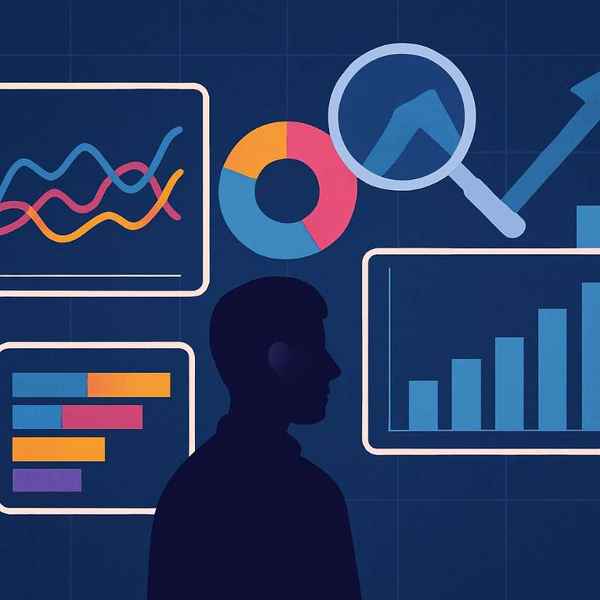
Emerging Trends in Data Analysis and Business Intelligence
March 4, 2026 | By GenRPT
Introduction
In today’s fast-paced digital landscape, organizations are continuously seeking ways to leverage data for strategic advantage. Data analysis and business intelligence have become essential components for decision-making processes across industries. As technology advances, new trends are emerging that are reshaping how businesses interpret data, visualize insights, and harness AI software to stay competitive. This article explores these emerging trends, highlighting their implications for the future of business intelligence and data analysis. It also examines how tools like GenRPT support organizations in navigating this evolving landscape effectively.
About the Topic
Data analysis involves examining large sets of data to discover meaningful patterns, correlations, and insights. It enables companies to understand customer behavior, optimize operations, and identify new opportunities. Business intelligence encompasses a broader set of tools and processes that help organizations collect, analyze, and present data in a way that supports strategic decisions.
Over the years, advances in AI software have transformed data analysis from manual, time-consuming tasks into automated, real-time processes. Data visualization plays a critical role by turning complex data into intuitive graphics that facilitate understanding and communication. Together, these elements form the backbone of modern business intelligence strategies. The confluence of these technologies has led to new trends that promise even greater capabilities in data-driven decision-making.
Emerging Trends in Data Analysis and Business Intelligence
The rise of Integrated AI-Powered Solutions
One of the most significant trends is the increasing integration of AI software into traditional data analysis platforms. AI technologies enable automated data cleaning, predictive analytics, and anomaly detection, reducing manual effort and increasing accuracy. Today’s AI-powered business intelligence tools can analyze vast datasets rapidly and offer actionable insights with minimal human intervention. This shift allows organizations to respond faster to market changes and optimize operations dynamically.
Augmented Analytics
Augmented analytics combines AI with traditional analytics processes to enhance human decision-making. This approach uses machine learning algorithms to generate insights automatically and suggest possible courses of action. It democratizes data analysis by making complex insights accessible to non-technical users. This trend is particularly impactful for small and medium-sized businesses that may lack extensive data teams but want to harness the power of data analysis effectively.
Real-Time Data Analysis and Visualization
Real-time analysis is no longer a luxury but a need in many sectors. Businesses require instant insights into operations, customer interactions, and market trends. Data visualization tools are evolving to support interactive dashboards that update instantaneously. This capability facilitates proactive decision-making and quicker responses to emerging issues. Companies leveraging real-time data analysis gain a competitive edge by being more responsive and agile.
Enhanced Data Governance and Security
As data becomes central to business strategies, concerns around data privacy, security, and compliance grow. Emerging trends emphasize strengthened data governance frameworks. Privacy-preserving AI techniques and secure data visualization methods are being adopted to maintain trust and comply with regulations like GDPR. Ensuring data integrity and security is now a pivotal part of business intelligence strategies.
Advanced Data Visualization Techniques
Innovations in data visualization include immersive dashboards, 3D visualizations, and interactive storytelling. These techniques make complex data accessible and engaging for a broader audience within organizations. Effective visualization tools help translate abstract data into clear, actionable insights, supporting strategic planning and operational execution.
Use Cases
Numerous industries capitalize on these emerging trends. Financial institutions use real-time data analysis and AI-driven algorithms to detect fraud and optimize investment strategies. Retailers leverage advanced data visualization and business intelligence tools to personalize customer experiences and manage inventory efficiently. Healthcare providers implement AI-powered data analysis for better patient care and operational streamlining. Even manufacturing sectors utilize predictive analytics to anticipate equipment failures and reduce downtime. Across these use cases, the common thread is the enhanced capacity to make informed decisions swiftly and accurately.
Future Outlook
The future of data analysis and business intelligence will likely be characterized by increased automation and smarter AI integration. As AI software continues to evolve, we can expect more predictive models capable of identifying trends before they fully materialize. Data visualization tools will become more immersive, leveraging augmented reality and virtual reality technologies to present data in three dimensions. Additionally, the focus on data privacy and security will lead to innovations that allow organizations to analyze data without compromising sensitive information.
Cloud-based platforms will facilitate seamless access to data and analytical tools, breaking down silos and fostering collaboration. The combination of augmented analytics and real-time data processing will redefine how businesses operate, enabling more proactive and strategic decisions. Companies that adapt to these trends will have a significant competitive advantage in this data-driven era.
Conclusion
Emerging trends in data analysis and business intelligence are revolutionizing how organizations interpret and utilize data. The integration of AI software, advances in data visualization, and the move toward real-time analytics are empowering businesses to make smarter, faster decisions. As these technologies continue to develop, organizations must stay ahead of the curve to maximize their data capabilities. Tools like GenRPT support this evolution by providing robust, innovative platforms that facilitate effective data analysis and visualization. Embracing these trends today will position companies for success in an increasingly data-dependent world.