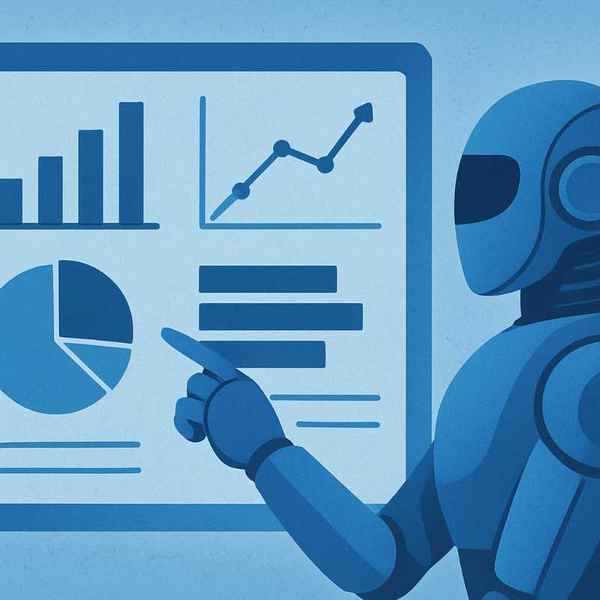
Automating Data Presentation with AI Technologies
March 4, 2026 | By GenRPT
Introduction
In the rapidly evolving landscape of business operations, making sense of vast quantities of data is more critical than ever. Organizations rely heavily on data analysis to drive strategic decisions, optimize processes, and identify new opportunities. However, the challenge often lies not in collecting data but in effectively communicating insights derived from it. That’s where AI software and automation come into play. Automating data presentation through advanced AI technologies transforms the way businesses visualize and interpret information, making insights more accessible and impactful. This comprehensive guide explores how AI-powered tools are revolutionizing the field of business intelligence, with a focus on data visualization and the key role of automating data presentation.
Understanding the Significance of Data Analysis
Data analysis is the foundation of informed decision-making in modern organizations. It involves examining, cleaning, and modeling data to extract valuable insights. Traditional methods often require significant manual effort and expertise, which can slow down the decision-making process. As the data landscape becomes more complex and voluminous, organizations seek more efficient solutions to analyze and present data.
In this context, AI software offers a promising approach. By automating specific aspects of data analysis, AI can quickly identify patterns and trends that might otherwise go unnoticed. This accelerates the workflow, allowing teams to focus on strategic interpretation rather than tedious data crunching.
The Power of Business Intelligence and Data Visualization
Business intelligence (BI) encompasses a range of technologies, applications, and practices that help organizations collect, analyze, and present business data. At the heart of BI are data visualization tools that turn raw data into clear, compelling graphics. Visual representations like charts, dashboards, and heatmaps allow stakeholders to grasp complex information instantaneously.
Effective data visualization simplifies decision-making and enhances communication across departments. However, creating visualizations manually can be time-consuming, especially when dealing with constantly changing data. Artificial intelligence enhances this process by automating the generation of visual content, ensuring that insights are always current and accurately represented.
Strategic Approach to Automating Data Presentation
Automating data presentation with AI technologies involves several strategic considerations. The primary goal is to streamline workflows while ensuring accuracy and clarity. Organizations should focus on integrating AI-driven solutions capable of dynamic data analysis, visualization, and reporting.
One effective approach is to employ AI software that connects seamlessly with existing data sources, gathers relevant data, and automatically updates the visualizations and reports. This reduces manual effort and minimizes errors, enabling real-time insights. Additionally, customizable dashboards allow users across different levels of the organization to access tailored visual reports suited to their specific needs.
The workflow can be further optimized by implementing machine learning algorithms that can predict future trends based on historical data, thus providing proactive insights. Automating alerts for significant data changes or anomalies also enhances responsiveness and business agility.
Use Cases Demonstrating AI-Driven Data Presentation
Numerous industries are leveraging AI to automate data presentation, demonstrating its practical benefits. For example, retail companies use AI-powered dashboards to monitor sales, inventory levels, and customer behaviors. These dashboards are continuously updated with real-time data, allowing managers to make quick adjustments to marketing campaigns or stock management.
In the financial sector, firms deploy AI software to analyze market data, generate visual reports, and spot anomalies or investment opportunities without extensive manual intervention. This enables traders and analysts to respond faster and with greater accuracy.
Healthcare providers utilize AI-driven data visualization tools to interpret patient data, track treatment progress, and identify patterns across large datasets. Automating the presentation of such insights faster results in improved patient care and operational efficiency.
Future Outlook
The future of automating data presentation with AI technologies is promising. As AI algorithms become more sophisticated, their ability to interpret complex datasets will expand. Innovations in natural language processing will enable the generation of narrative explanations alongside visualizations, making data insights more understandable for non-technical audiences.
Furthermore, advancements in AI-driven predictive analytics will provide organizations with proactive insights, minimizing risks and identifying opportunities before they fully materialize. Integration with IoT and edge computing devices will also facilitate real-time data collection and visualization in diverse environments.
As organizations continue to prioritize data-driven decision-making, tools that automate and enhance data presentation will become indispensable. Adoption of these technologies will likely become a standard component of comprehensive business intelligence strategies.
Conclusion
Automating data presentation with AI technologies embodies the next step in making data analysis more efficient, insightful, and accessible. AI software streamlines workflows by providing real-time, accurate visualizations that enhance understanding across various sectors. Companies increasingly rely on dynamic dashboards, automated reporting, and predictive analytics to stay competitive in today’s fast-paced business environment.
GenRPT plays a crucial role in supporting this trend by offering robust solutions for automating data presentation. With its advanced features, organizations can generate compelling visual reports effortlessly, freeing valuable resources and improving decision-making quality. Emphasizing simplicity, accuracy, and speed, GenRPT is a vital component in modern business intelligence landscapes, empowering organizations to unlock the full potential of their data.