The Role of AI Software in Enhancing Data Visualization
March 4, 2026 | By GenRPT
Introduction
In today’s digital age, the ability to interpret and present data effectively is vital for making informed business decisions. Companies across industries are increasingly relying on data analysis to gain insights, optimize operations, and stay ahead of competition. Central to this process is data visualization, which transforms complex data sets into understandable visual formats. The emergence of AI software has revolutionized this domain, offering innovative tools that significantly enhance data visualization capabilities. This article explores how AI-powered solutions are shaping the future of business intelligence through advanced data analysis and visualization techniques.
About the Topic
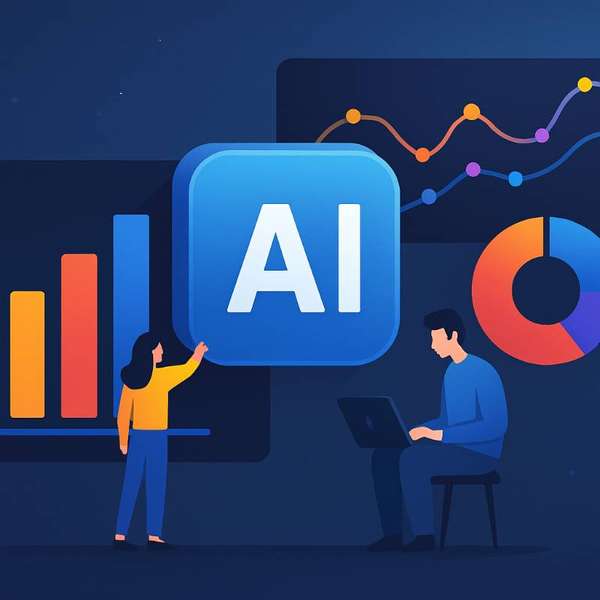
Data visualization serves as a bridge between raw data and actionable insights. Traditional visualization methods often involve static charts and graphs that can be limited in revealing deeper patterns or trends. AI software takes this a step further by automating the analysis process and generating dynamic visual representations tailored to specific business needs. By integrating AI, organizations can perform more sophisticated data analysis, identify hidden correlations, and present findings in compelling formats. This transition from manual, static visuals to intelligent, interactive displays is transforming how businesses interpret their data.
The Evolution of Data Visualization with AI
Historically, data visualization relied on human expertise to craft visual representations that could reveal meaningful insights. While effective, this approach was often time-consuming and prone to oversight due to the complexity and volume of data. The advent of AI software introduced automation and intelligence into this process, enabling real-time analysis and visualization. Features such as machine learning algorithms can detect patterns that might elude human analysts, while natural language processing allows users to generate visual insights through simple queries. As a result, AI-powered data visualization tools empower users to derive insights faster and more accurately.
Strategic Advantages of AI-Driven Data Visualization
Implementing AI software in data visualization offers several strategic benefits for businesses
1. Enhanced Data Analysis Capabilities
AI software can analyze vast datasets efficiently, uncovering trends and anomalies that may not be apparent through traditional methods. This deep analysis supports better decision-making and strategic planning.
2. Improved Business Intelligence
By providing clearer, more interactive visual reports, AI tools improve business intelligence. They enable stakeholders to understand complex data quickly and thoroughly, facilitating more informed decisions.
3. Increased Efficiency and Productivity
Automation reduces the time spent on data cleaning, analysis, and visualization setup. Teams can focus on interpreting insights and formulating strategies rather than raw data processing.
4. Greater Data Accessibility
AI-powered visualizations can be customized for different audiences, making complex data accessible to non-technical stakeholders. Interactive dashboards allow users to explore data dimensions on their own.
5. Predictive Analytics and Forecasting
Advanced AI algorithms can incorporate predictive analytics into visual reports, providing forecasts and scenario analyses that help organizations anticipate future trends and prepare accordingly.
Use Cases Demonstrating AI and Data Visualization in Action
Numerous industries are leveraging AI software to enhance their data visualization processes
– Manufacturing
Manufacturers utilize AI-driven data analysis and visualization to monitor operational performance and detect potential equipment failures before they occur. Visual dashboards allow managers to oversee production metrics in real-time.
– Finance
Financial institutions employ AI software to analyze market trends and visualize risks. Interactive charts and heatmaps assist traders and analysts in making swift, data-informed decisions.
– Healthcare
Healthcare providers use AI-enabled data visualization tools to interpret patient data, track disease outbreaks, and optimize treatment plans. Visual insights improve communication among medical teams and support evidence-based medicine.
– Retail
Retailers deploy AI-powered platforms to analyze sales data, customer behavior, and inventory levels. Visual reports help store managers optimize stock levels and personalize marketing strategies.
Future Outlook
The future of data visualization in business intelligence is highly promising, driven by ongoing advancements in AI technology. As machine learning and deep learning models become more sophisticated, we can expect even more intuitive and autonomous visualization tools. These systems will likely offer real-time, predictive insights that adapt to dynamic business environments. Moreover, the integration of augmented reality (AR) and virtual reality (VR) with AI-enhanced visualization could provide immersive data exploration experiences. Privacy and ethical considerations will also shape future developments, ensuring data is used responsibly while maximizing its potential for insightful visualization.
Furthermore, the increasing accessibility of AI software will empower smaller organizations to employ advanced data visualization techniques without requiring extensive technical expertise. This democratization of data analysis will foster a more data-driven culture across industries, enhancing decision-making at all levels.
Conclusion
The role of AI software in enhancing data visualization is pivotal for transforming raw data into strategic assets. By automating complex data analysis, increasing efficiency, and enabling interactive visualizations, AI tools significantly bolster business intelligence efforts. These innovations empower organizations to uncover insights rapidly, communicate findings effectively, and stay agile in a competitive landscape. As technology continues to evolve, the integration of AI with data visualization will become even more seamless and powerful. Supporting this trend, GenRPT offers industry-leading tools that harness AI to elevate data visualization, making complex data accessible, engaging, and insightful. Embracing such solutions is essential for any organization aiming to leverage the full potential of their data assets.