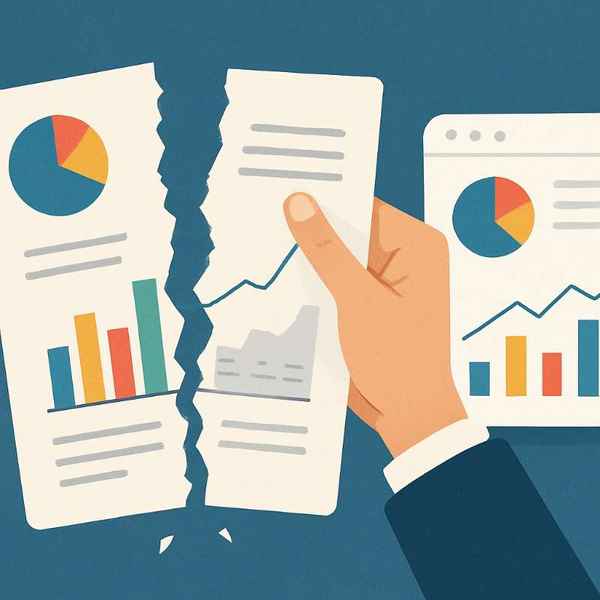
The End of Static Business Reports
March 4, 2026 | By GenRPT
Introduction
In today’s fast-paced business environment, staying ahead requires agility and accurate insights. Traditional static reports have long been the backbone of business analysis, but they come with limitations. They often lack interactivity, real-time data integration, and visual clarity. As companies seek more dynamic and accurate ways to understand their operations, the evolution toward more flexible data presentation methods is evident. Data analysis combined with artificial intelligence (AI) software and cutting-edge business intelligence tools is transforming how organizations view and use data. The end of static business reports heralds a new era, empowering decision-makers with real-time, interactive, and visually compelling data visualization tools.
About the Topic
Static business reports typically involve compiled data presented in fixed formats like PDFs or printed documents. While these documents can be useful for summary or archival purposes, they are limited in scope. They do not support interactive exploration of data, which is essential for uncovering insights or identifying trends quickly. With advances in data analysis techniques, AI software now enables companies to process vast quantities of data efficiently, extracting meaningful patterns and actionable insights. Business intelligence platforms integrate these innovations, providing dashboards and visualization tools that make data more accessible and understandable.
The primary issue with static reports is their inability to adapt to the evolving needs of modern organizations. In the current landscape, agility and real-time insights are crucial. Static reports require manual updates, often delay decision-making, and lack the user engagement necessary for deep analysis. As a result, organizations are increasingly turning toward dynamic data visualization platforms that allow users to interactively explore data, filter information, and see up-to-date results instantly. This strategic shift enhances transparency, accelerates decision-making processes, and ultimately leads to better business outcomes.
Title-Specific Strategic
Transitioning from Static to Dynamic Business Intelligence
Shifting from traditional static reporting to dynamic business intelligence involves a fundamental change in how organizations approach data analysis. Companies need to invest in tools that facilitate real-time data integration, enable sophisticated data visualization, and support AI-powered insights. This transition helps organizations break free from outdated methods and adopt a more flexible, interactive approach. Key to this strategy is ensuring that all departments can access and interpret the data relevant to their operations, promoting a data-driven culture.
Adopting AI-enabled software capable of automating data collection and analysis is essential. These tools can identify anomalies, forecast future trends, and generate predictive insights, saving valuable time and resources. Business intelligence platforms consolidate data from various sources, presenting it through visual dashboards that make complex datasets easy to understand. This approach improves collaboration across teams as everyone works from a common, real-time data foundation, aligning their strategies with the most current information.
Use Cases
Many industries benefit from transitioning away from static reports to dynamic data visualization and analysis platforms. Retail companies, for example, use these tools to monitor sales trends and inventory levels in real-time. This allows for quick adjustments to marketing campaigns, stock management, or promotional strategies. Financial institutions leverage business intelligence tools to track market fluctuations and assess portfolio risks accurately. Healthcare organizations can analyze patient data interactively to improve care quality and operational efficiency.
Manufacturing firms utilize AI software integrated with data analysis platforms to optimize production processes. By visualizing real-time machine data, they can predict maintenance needs, reduce downtime, and improve quality control. E-commerce businesses employ business intelligence dashboards to analyze customer behavior, identify purchasing patterns, and tailor marketing efforts effectively. These examples highlight how an interactive, visualization-driven approach enables organizations to act swiftly and make data-informed decisions.
Future Outlook
The future of business reports is firmly rooted in innovation and agility. As AI software becomes more advanced, its integration with business intelligence tools will further enhance the depth and accuracy of insights. Natural language processing and predictive analytics will make data analysis accessible to non-technical users, enabling broader organizational use. Interactive data visualization will become more sophisticated, offering immersive experiences such as augmented reality overlays or virtual dashboards.
Moreover, the shift toward self-service analytics will continue to democratize data access within organizations. Employees at all levels will be empowered to explore and analyze data without reliance on specialized IT teams. The integration of real-time data streams from Internet of Things (IoT) devices and other sensors will make dynamic reporting more comprehensive and timely. As technology evolves, static business reports will be all but phased out, replaced by adaptable, insightful, and visually engaging data visualization tools.
Conclusion
The end of static business reports marks a transformative shift in how organizations approach data analysis. Moving toward dynamic, AI-powered business intelligence solutions enhances the ability to make timely, informed decisions. Interactive data visualization plays a vital role in democratizing data access and improving organizational agility. These tools support a more transparent, collaborative, and responsive business environment, better suited to the demands of modern markets.
Supporting this transition is GenRPT, which provides robust capabilities for real-time data visualization, AI integration, and flexible report generation. By simplifying complex data into compelling visual formats, GenRPT empowers organizations to leverage data more effectively, fostering a culture of innovation and continuous improvement. Embracing these technologies ensures organizations remain competitive and adapt seamlessly to the ongoing digital transformation in business reporting.
In conclusion, the demise of static business reports opens the door to a future where data is accessible, actionable, and visually engaging. As companies harness the power of AI software and business intelligence platforms, they can unlock new opportunities and drive sustained growth. The era of static reporting is fading, replaced by a more dynamic and insightful approach to understanding business performance.