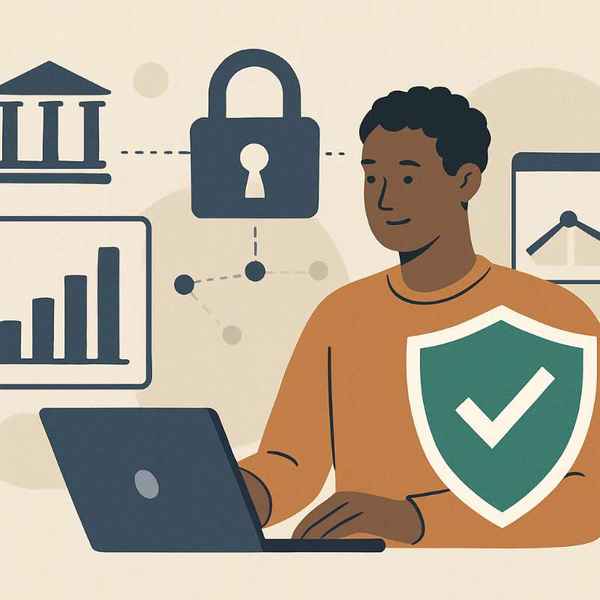
Building Trust with Governance and Security in Data Analytics
March 2, 2026 | By GenRPT
In today’s data driven environment, organizations depend on analytics to guide strategy, improve operations, and stay competitive. But as data volume and complexity increase, concerns around privacy, compliance, and misuse grow as well. A reliable data analysis solution must do more than generate insights. It must embed governance and security at every stage while supporting diverse data sources and enabling fast data analysis. Trust becomes the foundation of effective data driven decision making.
Why Trust Matters in Data Analytics
Data analytics influences financial planning, healthcare treatment, customer engagement, and operational performance. When insights are based on poorly governed or insecure systems, risks multiply. Data breaches damage reputation. Compliance failures result in penalties. Poor data quality leads to wrong decisions.
Trustworthy analytics requires a structured framework that ensures accountability, transparency, and protection. Governance defines how data is accessed, maintained, and monitored. Security protects information from internal and external threats. Together, they create confidence in analytics outcomes.
Governance as the Foundation
Governance sets the rules for responsible data usage. It determines who can access data, how it is stored, and how long it is retained. A strong governance model includes data classification, lifecycle management, quality standards, and audit trails.
When organizations integrate diverse data sources such as CRM systems, supply chain records, IoT sensors, and social platforms, governance ensures consistency and reliability. Without it, integration may introduce inconsistencies or compliance risks.
A comprehensive data analysis solution should automate governance processes where possible. Automated data validation, logging, and reporting increase transparency and reduce manual oversight gaps.
Strengthening Security Across the Data Lifecycle
Security must extend across ingestion, storage, processing, and reporting. Encryption protects sensitive information at rest and in transit. Role based access control ensures that only authorized users interact with critical datasets. Continuous monitoring detects unusual activity early.
As cyber threats evolve, security frameworks must adapt. Embedding governance and security directly into analytics platforms reduces vulnerabilities. Instead of slowing down analysis, these measures create a secure foundation that supports fast data analysis with confidence.
Organizations that prioritize governance and security reduce operational risk and strengthen stakeholder trust.
Enabling Fast Data Analysis Without Compromise
Speed is essential in competitive markets. Financial institutions require instant fraud detection. Retailers need real time inventory adjustments. Healthcare providers rely on rapid diagnostics.
Fast data analysis should not conflict with compliance. Scalable infrastructure and optimized pipelines allow organizations to process high volume data securely. Modern data analysis solutions balance performance and protection by integrating security protocols within real time processing environments.
When systems are designed correctly, governance and security enhance rather than hinder operational speed.
Industry Use Cases
Financial Services
Banks analyze transactions from multiple systems to detect fraud in real time. Governance ensures compliance with financial regulations. Security measures protect customer data. Fast data analysis flags suspicious activity instantly.
Healthcare
Healthcare organizations integrate patient records, lab results, and diagnostic data. Strong governance policies protect privacy. Secure access controls prevent unauthorized exposure. Rapid analytics accelerates treatment decisions safely.
Retail
Retailers combine sales data, loyalty program activity, and online engagement metrics. Governance ensures data consistency. Security prevents misuse. Real time insights optimize pricing and promotions.
Manufacturing
Manufacturers collect equipment sensor data and supply chain records. Governance standards maintain accuracy. Security protects intellectual property. Fast data analysis enables predictive maintenance and minimizes downtime.
Across industries, integrating governance and security into analytics platforms strengthens both trust and performance.
Future Outlook
As data ecosystems expand, governance and security will become even more advanced. Cloud native architectures will embed compliance checks automatically. Artificial intelligence will help detect anomalies and enforce policies proactively. Blockchain may enhance traceability and auditability across distributed systems.
Regulatory environments will continue to evolve. Organizations must adopt flexible data analysis solutions that adapt quickly to new requirements. Real time analytics powered by edge computing will grow in importance, delivering fast data analysis without compromising protection.
Trust will remain the core principle guiding analytics strategies.
Conclusion
Trustworthy data analytics depends on strong governance and security practices. Organizations must protect sensitive information, maintain compliance, and ensure data quality while supporting diverse data sources and enabling fast data analysis.
A comprehensive data analysis solution integrates these elements into a unified framework. GenRPT supports this vision by delivering a secure and scalable platform designed to prioritize governance and security while maintaining high performance. By embedding trust into analytics processes, organizations can confidently unlock insights and drive sustainable growth.