Strategies for Seamless Data Source Integration
March 2, 2026 | By GenRPT
In today’s data driven world, organizations depend on accurate and timely insights. A strong data analysis solution helps businesses understand customers, improve operations, and stay competitive. But the real challenge is not collecting data. It is integrating diverse data sources without breaking governance and security standards. When integration is done right, data workflows become smoother and hidden insights become visible.
The Importance of Unified Data Ecosystems
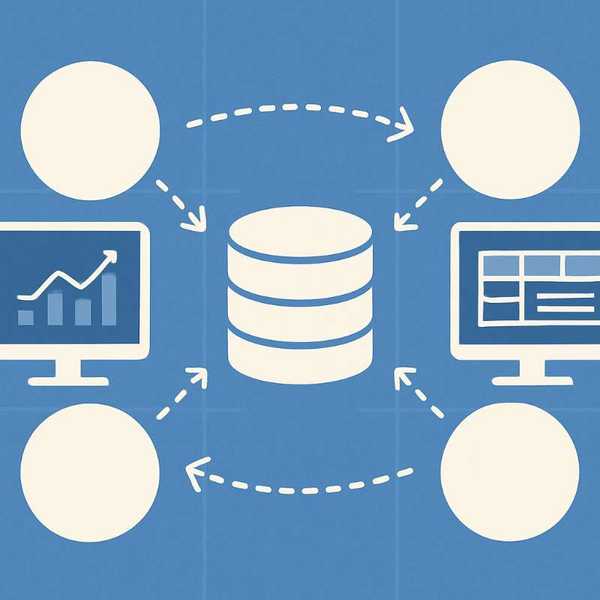
Organizations generate data from structured databases, social media feeds, IoT devices, cloud applications, and internal systems. Each source provides useful insights. However, when these sources remain disconnected, data stays in silos and loses value. A unified ecosystem allows seamless data source integration. This improves operational efficiency, supports fast data analysis, and enhances decision making accuracy. The goal is to create an environment where diverse data sources work together instead of operating independently.
Building the Right Integration Strategy
A successful approach begins with understanding the full data landscape. Organizations should identify all data sources, review formats, check access protocols, and evaluate business relevance. After mapping the ecosystem, the next step is selecting a flexible data analysis solution that supports ingestion, transformation, and storage across multiple formats. The platform must maintain governance and security throughout the process.
Interoperability is essential. Standard APIs and consistent data formats allow systems to communicate efficiently. Cloud platforms offer scalability and flexibility for integrating multiple data streams. Automation tools reduce manual effort and minimize errors during ingestion and transformation.
Governance and security must remain central to the strategy. As data moves across systems, organizations must protect sensitive information. Role based access control, encryption, compliance checks, and audit trails ensure secure integration. These practices maintain trust while enabling innovation.
Enabling Fast Data Analysis
After integration, organizations must focus on fast data analysis. Speed allows businesses to respond quickly to risks, trends, and opportunities. High performance analytics tools enable efficient querying of large datasets. Modern data analysis solutions provide real time dashboards, automated reporting, and predictive capabilities.
When diverse data sources are analyzed together, insight quality improves. For example, combining sales data with customer sentiment from social media offers a more complete understanding of demand patterns. Real time analytics supports proactive decision making across operations, marketing, and customer engagement.
Practical Use Cases
Retail
A retail chain integrates in store transactions, online sales, and social media feedback. Using a unified data analysis solution, the company gains a full view of customer behavior. This supports personalized marketing and better inventory planning in real time.
Financial Services
A financial institution aggregates regulatory data, transaction histories, and market news feeds. With strong governance and security controls, analysts can detect fraud risks and compliance issues quickly. Fast data analysis reduces exposure and improves regulatory alignment.
Healthcare
Healthcare providers consolidate patient records, wearable device data, and clinical research. Seamless data source integration improves diagnostics and supports personalized treatment strategies. Accurate and secure data management enhances patient outcomes.
The Future of Data Source Integration
Technology will continue to simplify integration. Artificial intelligence and automation will improve data mapping, cleansing, and validation. Intelligent systems will detect inconsistencies and maintain data quality automatically.
Cloud computing will strengthen scalable data ecosystems. Hybrid and multi cloud environments will demand seamless connectivity across platforms. Governance and security frameworks will evolve to meet stricter regulations and growing cyber risks.
Data cataloging and metadata management will become more important. Organizations will gain better visibility into available data assets and usage patterns. This transparency will improve fast data analysis and strategic planning.
Conclusion
Seamless data source integration is essential for organizations that want reliable and rapid insights. A comprehensive data analysis solution must support diverse data sources, maintain governance and security, and enable fast data analysis at scale. When integration is strategic and secure, businesses unlock the full value of their information.
GenRPT supports this vision by offering a powerful and scalable data analysis platform built for optimized integration and insight generation. It simplifies connecting multiple data sources while enforcing strong governance and security standards. By enabling fast and secure analytics, GenRPT helps organizations make smarter and faster decisions in an evolving digital landscape.