Combining Structured and Unstructured Data Effectively
March 2, 2026 | By GenRPT
Introduction
In today’s data-driven world, organizations face the challenge of harnessing vast amounts of information stored in various formats. From traditional structured data like databases and spreadsheets to unstructured data such as emails, social media posts, and multimedia files, the diversity of data sources can be overwhelming. Effectively combining structured and unstructured data is essential to gain comprehensive insights that drive strategic decisions. Implementing a robust data analysis solution that bridges these data types ensures that businesses can unlock the full potential of their data assets. This article explores the importance of integrating diverse data sources, strategies to do so efficiently, and the future outlook for data analysis technologies.
Understanding the Data Landscape
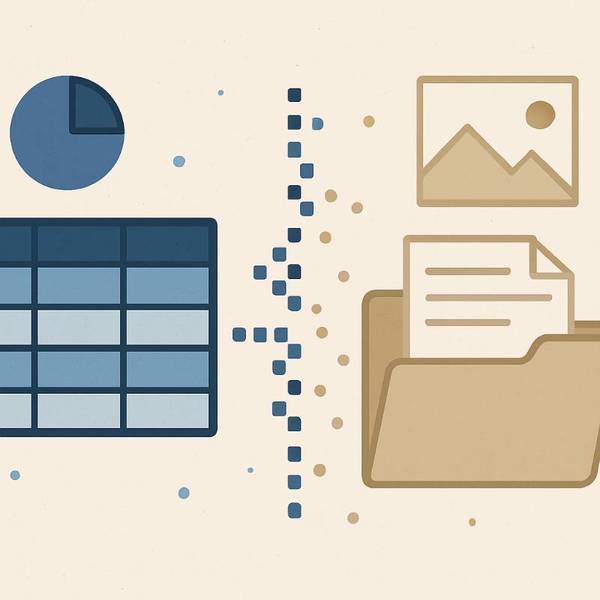
Structured data refers to information that is organized in a predefined manner, often stored in relational databases or spreadsheets. Its format allows for easy querying and analysis. Conversely, unstructured data lacks a fixed schema, making it more challenging to process, yet it contains valuable insights often missed by traditional analysis methods. Examples include text documents, images, videos, and social media content. Both data types hold critical information; merging them provides a complete picture that supports more accurate and actionable insights.
The Need for a Unified Data Approach
Organizations increasingly recognize that relying solely on structured data limits understanding. For example, customer feedback on social media or email communications can reveal sentiments and trends that numbers alone cannot capture. Combining these insights with transaction data enhances customer profiling and improves decision-making. However, integrating these different data formats requires a comprehensive data analysis solution capable of handling complexity, volume, and variety.
Key Strategies for Combining Data Effectively
1. Establish Robust Governance and Security
Before blending diverse data sources, establishing strong governance and security protocols is crucial. This ensures data privacy compliance, minimizes risks, and maintains data integrity. Organizations should implement access controls, audit trails, and encryption measures to safeguard sensitive information. A secure environment builds trust with stakeholders and supports compliance with regulations such as GDPR or HIPAA.
2. Leverage Fast Data Analysis Techniques
Speed is vital when working with large volumes of data. Fast data analysis allows real-time or near-real-time insights, enabling prompt decision-making. Utilizing advanced analytics tools and in-memory processing technologies accelerates data processing and reduces latency. This agility supports dynamic business environments where timely responses provide competitive advantages.
3. Integrate Multiple Data Sources Seamlessly
Integrating diverse data sources involves designing pipelines that can ingest, process, and unify data regardless of format. Data transformation and normalization facilitate compatibility across datasets. Utilizing scalable platforms that support various data types simplifies this process. Modern data analysis solutions should offer connectors and APIs that streamline integration, reducing manual effort and errors.
4. Employ Advanced Analytical Techniques
Applying techniques such as natural language processing (NLP), machine learning, and pattern recognition enhances the ability to extract meaningful insights from unstructured data. These methods can identify sentiment, detect anomalies, and classify content, providing context to structured data. Combining these analyses leads to richer understanding and more informed actions.
Use Cases
– Customer Experience Enhancement
By analyzing customer reviews, social media interactions, and purchase history, companies can tailor their offerings and improve satisfaction.
– Fraud Detection
Combining transaction data with unstructured data like emails and communication logs helps identify suspicious activities more effectively.
– Market Analysis
Integrating news articles, social media trends, and sales data enables organizations to anticipate market shifts and adapt strategies proactively.
Future Outlook
The future of combining structured and unstructured data is promising, driven by technological advances. The development of sophisticated data analysis solutions will continue to evolve, offering greater automation, scalability, and intelligence. Artificial intelligence and machine learning will become more integrated, enabling organizations to analyze complex datasets faster and more accurately. Additionally, improved governance frameworks and security protocols will facilitate safer data sharing across platforms, fostering collaboration and innovation.
As data sources become more diverse and volume increases, organizations must adopt flexible, secure, and speedy analysis solutions. Cloud-based platforms and advanced analytics tools will play a central role in managing this complexity. Emphasis on real-time insights and predictive analytics will empower businesses to act swiftly and strategically.
Conclusion
Integrating structured and unstructured data effectively is crucial for maximizing insights and maintaining a competitive edge. A comprehensive data analysis solution must prioritize governance and security, facilitate fast data analysis, and seamlessly combine diverse data sources. Such an approach enables organizations to uncover broader patterns, improve decision-making, and respond swiftly to market changes. Ultimately, solutions like GenRPT support this goal by providing the technological foundation necessary to handle complex datasets efficiently and securely. Embracing these strategies will position organizations to thrive in an increasingly data-centric world.