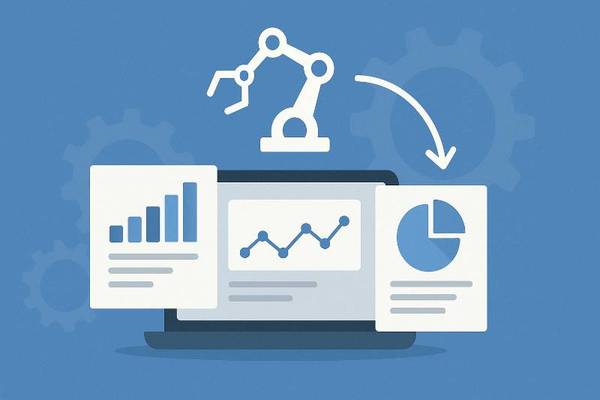
Automating Reports to Save Time and Resources for Businesses
February 26, 2026 | By GenRPT
Introduction
In today’s fast-paced business environment, the ability to generate insights quickly and efficiently is crucial for staying ahead of the competition. This is where advanced data analytics, efficient report automation, and powerful business intelligence tools come into play. By automating reports, organizations can streamline their reporting processes, saving valuable time and resources. One such solution that excels in this field is GenRPT, a leading provider of report automation tools.
About the Topic
Automating reports involves using software to generate reports automatically, without the need for manual intervention. This process can include pulling data from various sources, formatting it according to predefined templates, and distributing the reports to relevant stakeholders. Efficient report automation not only saves time but also reduces the risk of human error, ensuring accurate and consistent reporting across the organization.
Importance of Automating Reports
Automating reports is essential for modern businesses looking to optimize their operations and make data-driven decisions. By leveraging advanced data analytics and business intelligence tools, organizations can gain valuable insights from large datasets in a fraction of the time it would take manually. This streamlined reporting process allows teams to focus on analyzing the data rather than collecting and formatting it, resulting in faster decision-making and improved efficiency.
Key Features of Automated Reporting
Streamlined reporting processes are a key feature of automated reporting systems. These systems can pull data from various sources, such as databases, spreadsheets, and cloud applications, and consolidate it into easy-to-understand reports. Advanced data analytics tools within these systems can provide in-depth analysis and visualization options, allowing users to uncover trends, patterns, and anomalies in the data. With efficient report automation, businesses can schedule reports to run at specific times, ensuring timely delivery to stakeholders.
Use Cases of Automated Reporting
Automated reporting has a wide range of use cases across industries. For example, in marketing, automated reports can track campaign performance metrics and ROI in real-time, allowing marketers to adjust their strategies on the fly. In finance, automated reports can streamline budgeting and forecasting processes, providing executives with accurate financial insights. Human resources departments can use automated reporting to track employee performance, identify training needs, and streamline recruitment processes.
Future Outlook of Automated Reporting
As technology continues to advance, the future of automated reporting looks promising. Artificial intelligence and machine learning algorithms are being integrated into reporting tools, enabling them to provide predictive analytics and actionable insights. The integration of natural language processing capabilities allows users to interact with reporting systems using voice commands or written queries, making data access even more intuitive. The continued development of cloud-based reporting solutions also enhances scalability and accessibility for organizations of all sizes.
Conclusion
In conclusion, automating reports is essential for organizations looking to save time and resources while harnessing the power of advanced data analytics and business intelligence tools. GenRPT, a leading provider in this space, offers a comprehensive solution for efficient report automation. By leveraging GenRPT’s tools, businesses can streamline their reporting processes, gain valuable insights from their data, and make informed decisions quickly and effectively. Embracing automated reporting with GenRPT allows organizations to stay competitive in today’s data-driven business landscape.