The Life Cycle of an Insight in Modern Enterprises
February 25, 2026 | By GenRPT
Introduction
In today’s fast-paced business environment, making informed decisions is paramount for success. Companies rely heavily on data to identify trends, uncover opportunities, and mitigate risks. The journey from raw data to actionable insight is complex, involving multiple steps that ensure accuracy, relevance, and timely delivery. Data visualization software plays a crucial role in this process, transforming raw data into understandable and engaging visual formats. Coupled with advanced business intelligence solutions, organizations can harness their data more effectively than ever before. From automated report generation to streamlined reporting processes, the modern enterprise’s ability to manage this cycle determines its agility and competitiveness. This article explores the life cycle of an insight within contemporary organizations, highlighting key features, use cases, and future directions.
About the Topic
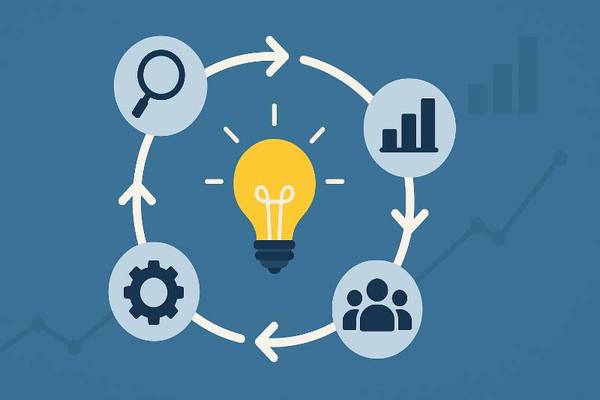
The life cycle of an insight begins with data collection. Raw data is gathered from various sources such as CRM systems, transactional databases, social media platforms, and IoT devices. This data, often unstructured or semi-structured, requires meticulous processing before any meaningful analysis can occur. Data visualization software is vital in this stage. It helps to clean, organize, and visualize data, enabling analysts to identify patterns or anomalies quickly. As data flows through the system, business intelligence solutions come into play, providing deeper analysis and contextual understanding. These tools facilitate the correlation of data points, helping to generate insights that can inform strategic decisions.
The next phase involves interpreting these insights. Effective communication of findings is essential to prompt action. Automated report generation features in modern business intelligence solutions automate the creation of dashboards, summaries, and detailed reports. This automation reduces the time spent on manual report writing and ensures consistency across reporting periods. Streamlined reporting processes allow decision-makers to access relevant insights swiftly and reliably. They can customize reports to their needs, compare historical data, and track Key Performance Indicators over time.
The final stage in the insight’s lifecycle is action. Insights that are complex or buried within data need to be translated into clear strategies or operational changes. The combination of visual representations and automated reporting helps stakeholders understand what steps to take. This cyclical process is continuous, as organizations must constantly update data, refine analytics, and adapt strategies based on new insights.
Importance, Scope, and Key Features
Understanding the importance of this lifecycle reveals why organizations invest in sophisticated tools and processes. Modern enterprises operate in highly competitive markets where timely insights can spell the difference between growth and decline. Real-time data analysis enables businesses to respond promptly to market changes, customer preferences, or supply chain disruptions.
The scope of this cycle is broad and encompasses multiple facets. Data visualization software acts as the bridge between raw numbers and human understanding. Features such as interactive dashboards, customizable visualizations, and real-time data updates enhance understanding and engagement. Business intelligence solutions expand this scope by offering advanced analytics, predictive modeling, and trend analysis. These capabilities transform basic data into foresight, allowing businesses to anticipate future developments.
Automated report generation is a key feature that boosts efficiency. It ensures consistent, error-free documents that can be scheduled or triggered by specific events. Streamlined reporting processes reduce manual labor and increase the frequency and accuracy of reporting. This is especially important in dynamic market conditions where decision-makers need up-to-date information at their fingertips.
Use Cases
Various industries leverage the life cycle of insights to drive operational excellence. Retailers use data visualization software to analyze customer purchase behaviors, optimize inventory levels, and personalize marketing campaigns. Business intelligence solutions facilitate this process by integrating sales, marketing, and supply chain data for comprehensive analysis.
Financial institutions rely on automated report generation for compliance reporting, risk analysis, and fraud detection. Streamlined reporting processes enable rapid response to emerging issues, reducing potential losses. In manufacturing, real-time dashboards monitor machinery performance and production metrics, allowing predictive maintenance and reducing downtime.
Healthcare organizations harness these tools to enhance patient care and optimize resource allocation. Data visualization software brings clinical data into clear visual formats, while BI solutions help analyze treatment outcomes and operational efficiency. Automated reports further assist in regulatory compliance and quality assurance processes.
Future Outlook
The future of the insight lifecycle in enterprises is promising, driven by technological advancements and increasing data volumes. Artificial intelligence (AI) and machine learning (ML) will deepen analytical capabilities, enabling predictive and prescriptive insights that are more accurate and actionable. These technologies will automate complex analyses, freeing up human resources for strategic tasks.
Enhanced automation features will become more prevalent, making report generation even more seamless. Companies will adopt solutions with greater integration capabilities, combining diverse data sources for a holistic view. Cloud-based platforms will facilitate scalable, collaborative environments where insights are shared effortlessly across teams and geographic boundaries.
Furthermore, the rise of natural language processing (NLP) will enable stakeholders to interact with data using conversational interfaces. Business users will generate reports or inquire about insights through simple language commands. Augmented reality (AR) and data visualization advancements will create immersive experiences, making complex data easier to understand.
As these trends unfold, organizations will inevitably adopt smarter, more intuitive systems to manage the entire insight lifecycle. This evolution will empower more data-driven decision-making, fostering innovation and competitive advantage.
Conclusion
The journey from raw data to strategic insight involves several interconnected stages that are vital for modern enterprises. Data visualization software provides the clarity needed to interpret complex datasets, while business intelligence solutions offer analytical depth. Automated report generation and streamlined reporting processes save time, reduce errors, and ensure that insights reach stakeholders promptly. This comprehensive lifecycle enables organizations to adapt swiftly to market changes, optimize operations, and seize new opportunities.
Implementing efficient tools and processes in this cycle can significantly enhance decision-making capabilities. As technology advances, enterprises can look forward to even more powerful automation, predictive analytics, and real-time insights. In this rapidly evolving landscape, the ability to manage the entire cycle effectively becomes a key differentiator.
By embracing these innovations, organizations ensure their data-driven culture remains robust and agile. Connecting data to action is no longer a challenge but an ongoing opportunity. Ultimately, this cycle fuels continuous improvement and sustained growth.
GenRPT helps organizations streamline their reporting and data analysis workflows, making it easier to harness insights and act swiftly. Its capabilities support the entire lifecycle, from data collection to final decision-making, empowering businesses to stay ahead in competitive markets.