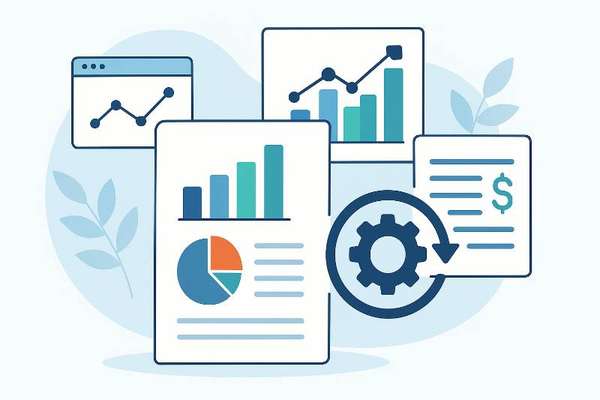
Report Generation and Automated Reporting for all time ready insights
February 20, 2026 | By GenRPT
Report generation and automated reporting are at the heart of modern business intelligence. As companies grow and data becomes more complex, the ability to efficiently produce accurate and insightful reports is vital. The landscape of data-driven decision-making hinges on how well organizations can transform raw information into clear, decision-ready insights. Leveraging sophisticated tools and techniques, businesses are now able to streamline their reporting processes, save time, and enhance strategic outcomes.
About the Topic
Report generation involves compiling data from various sources into structured formats that facilitate analysis and decision-making. Traditionally, this process was manual, labor-intensive, and prone to errors. Today, automated reporting has revolutionized how organizations handle this task. Automated reporting systems enable businesses to generate reports on demand or on a scheduled basis without human intervention. This automation reduces operational costs, minimizes inaccuracies, and ensures that decision-makers continually receive up-to-date information.
Business data transformation is a critical component of effective reporting. Raw data collected from multiple sources such as sales systems, financial databases, customer relationship management platforms, and web analytics needs to be cleaned, structured, and processed. Data transformation converts this complex information into a digestible and coherent form, serving as the foundation for accurate analysis. Finally, the goal is to produce insights that are not only emerged from data but are also ready to guide strategic decisions — termed decision-ready insights.
Importance, Scope, and Key Features of Automated Reporting Solutions
Automated reporting solutions have become indispensable tools for businesses seeking efficiency and accuracy. They allow organizations to eliminate repetitive manual tasks, freeing up valuable human resources for strategic thinking. Features such as real-time data integration, customizable report templates, and intuitive dashboards empower users to access relevant information instantly.
One key feature of modern reporting tools is scalability. As companies grow, their data volumes increase, demanding more sophisticated systems capable of handling expansive datasets. Automated reporting systems are designed to adapt to these needs without sacrificing performance. Additionally, many solutions include advanced data transformation capabilities, which enable users to structure raw data effectively, transforming complex data sets into formats suitable for analysis.
Security and compliance are also vital. Robust reporting platforms incorporate security features that control access and safeguard sensitive information. With compliance regulations evolving, such solutions help businesses adhere to data privacy standards like GDPR or HIPAA, ensuring responsible data management.
Furthermore, integration capabilities with existing enterprise systems — such as ERP, CRM, or cloud storage — make these tools flexible and versatile. They ensure seamless data flow across departments and systems, creating a unified data environment for comprehensive analysis.
Use Cases of Automated Business Reporting
The applications of automated reporting span multiple industries and functional areas. In finance, automated financial reporting ensures stakeholders have up-to-date statements, profit and loss reports, and cash flow analyses. Retail businesses use automated reporting for inventory management, sales forecasting, and customer analysis to optimize sales strategies and improve inventory turnover.
In marketing, automated dashboards analyze campaign performance in real-time, allowing marketers to adjust tactics quickly. Human resources departments generate employee performance reports and turnover analysis automatically, enabling timely interventions. Manufacturing firms utilize automated reports for supply chain management and operational efficiency tracking.
These use cases demonstrate how automated reporting accelerates workflows, enhances data accuracy, and provides timely insights. With decision-ready insights generated automatically, managers can respond swiftly to changing conditions and make strategic moves confidently.
Future Outlook
The Evolution of Business Data Transformation
The future of report generation and automated reporting lies in more intelligent, integrated, and predictive systems. As artificial intelligence and machine learning algorithms become more sophisticated, reporting tools will no longer just present past data. Instead, they will anticipate future trends, flag anomalies, and provide recommendations.
Natural language processing will enable users to query reports in plain English, making data analysis accessible even for non-technical personnel. Cloud-based platforms will continue to grow, providing scalable solutions regardless of business size. Integration with IoT devices and real-time data streams will facilitate live monitoring and instant decision-making.
Data transformation processes will become more automated and intelligent. Data cleaning, normalization, and structuring will occur seamlessly in the background. Organizations will increasingly rely on these advanced systems to generate actionable insights faster than ever before, significantly impacting competitive advantage and operational agility.
Conclusion
Effective report generation and automated reporting are essential components of a modern data strategy. They enable organizations to transform complex, raw business data into decision-ready insights rapidly and accurately. By leveraging automation, businesses can reduce manual efforts, improve data quality, and ensure timely delivery of critical information to key stakeholders.
As the field advances, solutions like GenRPT will continue to facilitate seamless business data transformation. They empower companies to harness the full potential of their data, leading to smarter decision-making and sustainable growth. Incorporating such tools into everyday operations positions organizations to stay ahead in increasingly competitive markets.
In summary, automated reporting transforms raw data into strategic assets. It streamlines processes, improves accuracy, and provides insights that drive actionable decisions. Future developments promise even greater intelligence, integration, and user accessibility. Embracing these innovations ensures that businesses remain agile and competitive in a data-driven world.