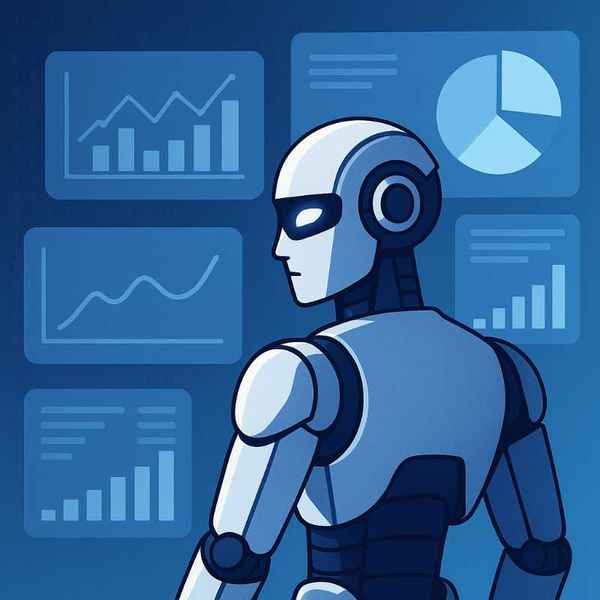
The Future of AI Driven Reporting and Insights
February 3, 2026 | By GenRPT
Introduction
Efficiency and precision in data analysis have become central to decision-making processes across various industries. As the volume of data generated continues to grow exponentially, organizations seek advanced solutions to interpret and utilize this information effectively. AI-driven reporting has emerged as a transformative technology, enabling companies to automate data compilation and generate actionable insights rapidly. Coupled with real-time insights, this technology empowers businesses to stay agile and responsive in a competitive landscape. The integration of artificial intelligence with real-time data analysis is redefining how organizations understand their operations, customers, and markets. This article explores the evolving landscape of AI-driven reporting and highlights the importance of real-time insights in shaping future strategies.
About the Topic
AI-driven reporting involves the use of artificial intelligence algorithms and machine learning models to automate the extraction, analysis, and presentation of data. Instead of manually sifting through countless data points, organizations can leverage AI to identify patterns, trends, and anomalies with minimal manual intervention. This automation accelerates reporting processes, reduces errors, and provides more accurate forecasts. Real-time insights, on the other hand, refer to the immediate analysis and dissemination of data as it becomes available. Instead of relying on periodic reports, businesses can access up-to-the-minute information, allowing for swift decision-making and quick adaptation to changing conditions.
This synthesis of AI-driven reporting with real-time data analysis creates a powerful tool for organizations seeking to harness the full potential of their data. It enables proactive management, personalized customer experience, and optimized operational efficiency. As digital transformation continues to accelerate, understanding the core elements and benefits of these technologies is essential for future business success.
Key Features and Importance of AI-Driven Reporting and Real-Time Insights
The future of data analytics is rooted in several key features that make AI-driven reporting indispensable. First, automation reduces manual effort, allowing analysts to focus on strategic tasks rather than data preparation. Second, machine learning models improve over time, providing increasingly accurate and nuanced insights. Third, natural language processing enables the generation of reports in plain language, improving accessibility for non-technical stakeholders.
Real-time insights are equally critical, offering immediate visibility into ongoing activities, market shifts, or operational anomalies. This immediacy permits organizations to swiftly respond to emerging issues, capitalize on fleeting opportunities, or mitigate potential risks. The ability to process and analyze real-time data enhances the agility of decision-making and ensures that strategies are based on the most current information available.
These capabilities support various organizational goals, including improved operational efficiency, enhanced customer engagement, competitive advantage, and risk management. The integration of AI-driven reporting with real-time insights ensures that decision-makers are equipped with timely, accurate, and relevant data, ultimately fostering a data-driven culture.
Use Cases Across Industries
AI-driven reporting and real-time insights are transforming operations in multiple sectors. In finance, traders utilize real-time data insights to monitor stock market movements and adjust investment strategies instantaneously. Banks employ AI reports to detect fraudulent transactions by analyzing patterns in real-time, thereby preventing losses and protecting customer assets.
In retail, businesses analyze customer behavior and sales data continuously to optimize inventory and marketing campaigns. AI-powered tools generate reports on consumer trends, enabling personalized marketing offers that enhance customer satisfaction and loyalty. Supply chain managers access real-time data to track shipments, predict delays, and reroute logistics efficiently.
In healthcare, medical professionals rely on AI-driven reporting to analyze patient data swiftly, improving diagnostics and treatment plans. Hospital administrators use real-time insights to manage staffing and operational workflows proactively, ultimately enhancing patient care quality.
Manufacturing sectors also benefit significantly, with AI systems providing real-time equipment monitoring and predictive maintenance schedules. This proactive approach minimizes downtime, increases productivity, and reduces operational costs.
Future Outlook of AI-Driven Reporting and Real-Time Data Insights
The evolution of AI-driven reporting signals a future where data is not only more accessible but also more actionable. Advances in natural language processing are making report generation more conversational and intuitive, enabling users to interact with data verbally or through simple queries. This democratization of data access encourages a broader range of team members to utilize insights in their daily work.
As machine learning models become more sophisticated, predictive analytics will reach new heights, providing anticipatory insights that enable organizations to prepare in advance rather than react to events. This shift toward predictive and prescriptive analytics will significantly enhance strategic planning across industries.
Edge computing and IoT devices will further bolster real-time data capabilities by removing latency issues associated with data transmission. This will allow even more granular and immediate insights from sensors embedded in products, equipment, or individual environments. Consequently, industries such as manufacturing, transportation, and agriculture will operate with unprecedented levels of efficiency and responsiveness.
Furthermore, privacy-preserving AI and data security frameworks will become integral, ensuring that real-time data collection and reporting comply with evolving regulations. Ethical considerations regarding AI’s role in decision-making will lead to more transparent systems, fostering trust among users.
The integration of AI-driven reporting with emerging technologies will usher in a new era of intelligent automation. Organizations that adopt these innovations early will be at a distinct competitive advantage, able to adapt swiftly and make informed decisions based on comprehensive, real-time data insights.
Conclusion
The future of AI driven reporting and insights lies in its capacity to transform raw data into strategic assets. By harnessing the power of automation and real-time data analysis, organizations can achieve higher levels of agility, accuracy, and foresight. These technologies enable decision-makers to respond immediately to operational issues, market trends, and customer needs, resulting in more competitive and resilient organizations. As the digital landscape continues to evolve, tools like GenRPT will play a crucial role in simplifying complex data environments and delivering precise, real-time insights that drive success. Embracing AI-driven reporting is no longer an option but a necessity for organizations aiming to stay ahead in a fast-paced business world. In this context, GenRPT stands out as a vital solution that integrates these advanced capabilities seamlessly, empowering users to leverage the full potential of their data with confidence and efficiency.